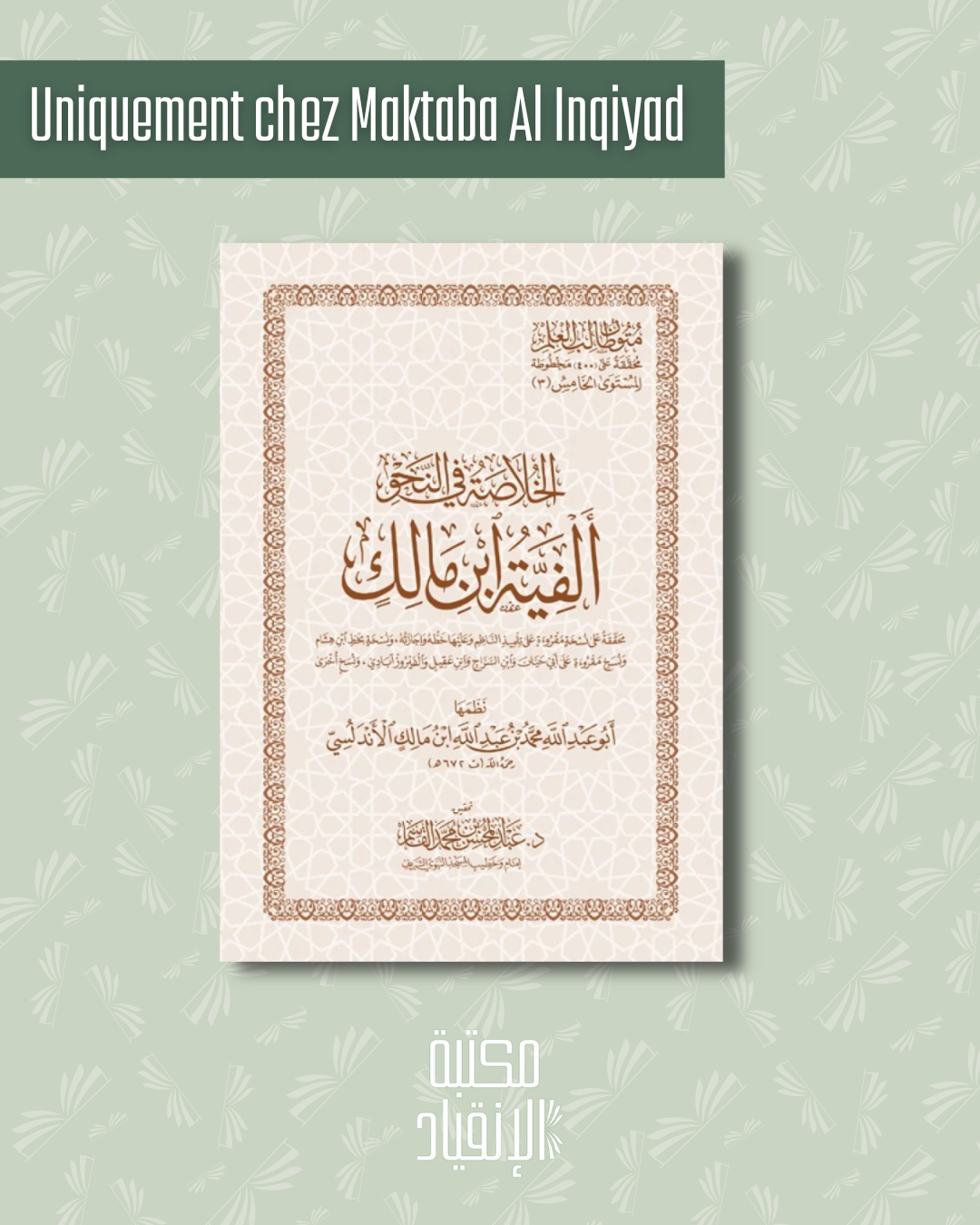
الخلاصة في النحو ألفية ابن مالك متن – Al khoulâsa fi nahwi alfiyyah Ibn Mâlik Matn

10,95 

Abū ‘Abdillāh Muḥammad ibn ‘Abdillāh ibn Mālik al-Andalusī (raḥimahullāh), the full name of the author, wrote Alfiyya which is a didactic poem composed of 1,002 verses (hence its name), composed in a regular meter (rajaz), aiming to summarize all the main rules of classical Arabic grammar.

It covers

  • Naḥw grammatical cases, prepositions, verbs, pronouns, and more.

  • Ṣarf : derivations, conjugations, verb forms, etc.

  • Additional topics such asiʿrāb, particles, word types, and more.

This matn is part of Level 6 of the Mutoun Ṭālib al-‘Ilm series.

(📝 To be studied with a teacher)

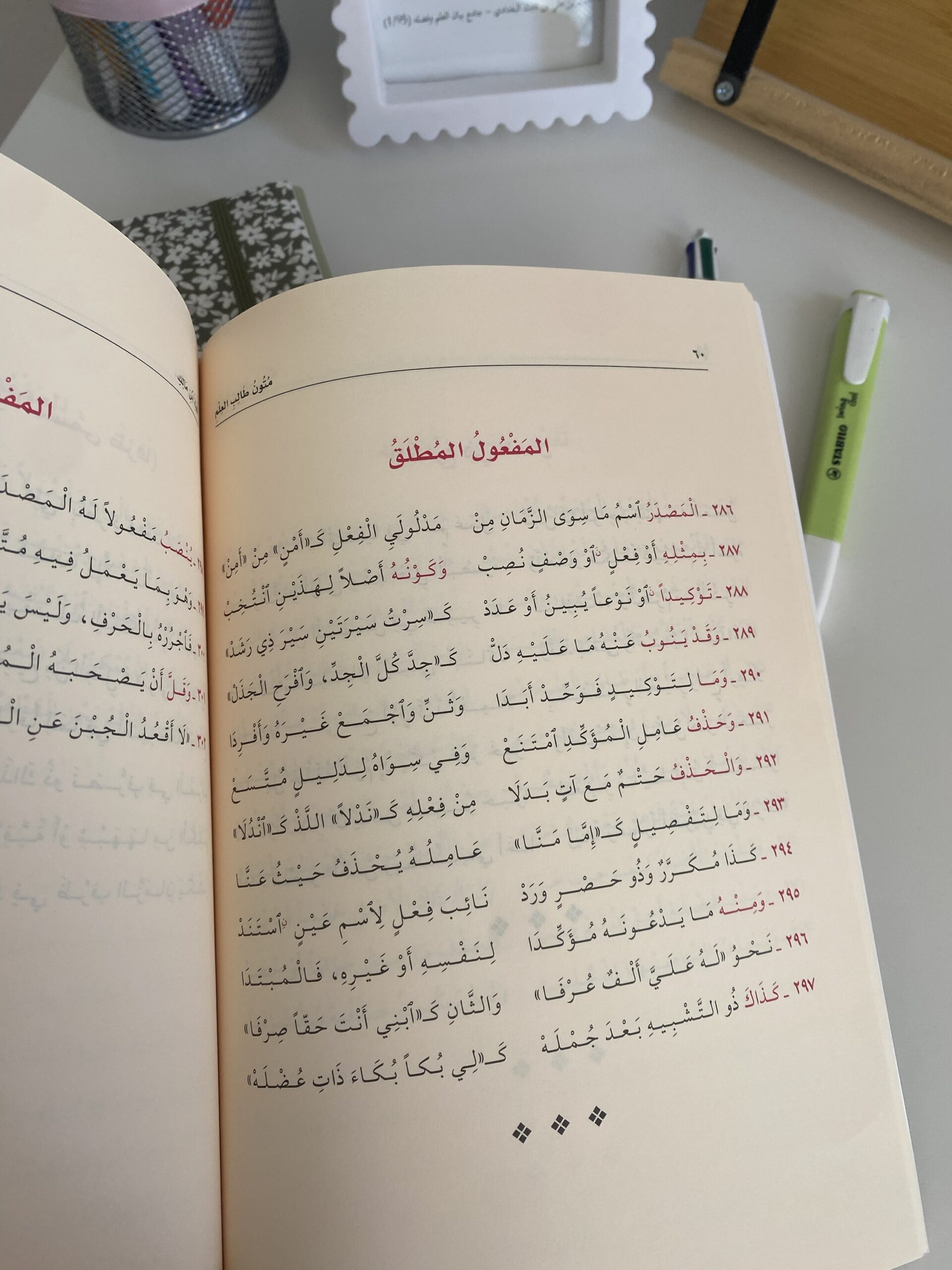
This matn is composed entirely of ḥakarāt and spans 140 pages.

Table of Contents:
  • المُقَدِّمَةُ (Introduction)

  • أَسْهَلُ طَرِيقَةٍ لِحِفْظِ وَمُرَاجَعَةِ المُتُونِ العِلْمِيَّة الخُلَاصَةُ فِي النَّحْوِ (أَلْفِيَّةُ آبْنِ مَالِكٍ) (The easiest method to memorize and review essential scientific texts in Arabic grammar (Alfiyyah Ibn Malik))

  • النُّسَخُ المُعْتَمَدَةُ فِي التَّحْقِيقِ (The authenticated versions in this edition)

  • [مُقَدِّمَةُ النَّاظِمِ] (Author’s Introduction)

  • الكَلَامُ وَمَا يَتَأَلَّفُ مِنْهُ (Speech and Its Components)

  • المُعْرَبُ وَالمَبْنِيُّ (Declinable and Invariable Words)

  • النَّكِرَةُ وَالمَعْرِفَةُ (The Indefinite and Definite Noun)

  • العَلَمُ (The Proper Noun)

  • اسْمُ الإِشَارَةِ (The Demonstrative Noun)

  • المَوْصُولُ (The Relative Noun)

  • المُعَرَّفُ بِأَدَاةِ التَّعْرِيفِ (The Noun Defined by the Definite Article)

  • الأَبْتِدَاءُ (The Initiation)

  • « كَانَ » وَأَخَوَاتُهَا ("Kāna" and its Sisters)

  • « مَا، وَلَا ، وَلَاتَ، وَإِنِ » المُشَبَّهَاتُ بِ »لَيْسَ » ("Mā, Lā, Lāt, and Innī" — words similar to "Laysa")

  • أَفْعَالُ المُقَارَبَةِ (Proximity Verbs)

  • « إِنَّ » وَأَخَوَاتُهَا ("Inna" and Its Sisters)

  • « لَا » الَّتِي لِنَفْيِ الجِنْسِ ("Lā" for General Negation)

  • «ظَنَّ» وَأَخَوَاتُهَا ("Zanna" and its Sisters)

  • «أَعْلَمَ، وَأَرَى» . (« A’lama » and « Arâ »)

  • الفَاعِلُ (The Subject)

  • النَّائِبُ عَنِ الفَاعِلِ (The Subject’s Substitute)

  • اشْتِغَالُ العَامِلِ عَنِ المَعْمُولِ (The Occupation of the Agent with the Complement)

  • تَعَدِّي الفِعْلِ وَلُزُومُهُ (Verb Transitivity and Its Requirement)

  • التَّنَازُعُ فِي العَمَلِ (Contestation in the Action)

  • المَفْعُولُ المُطْلَقُ (The Absolute Complement)

  • المَفْعُولُ لَهُ (The Complement of Purpose)

  • المَفْعُولُ فِيهِ (وَهُوَ المُسَمَّى ظَرْفاً) (The Complement of Place/Time, also called "ẓarf")

  • المَفْعُولُ مَعَهُ (The complement with)

  • الاسْتِثْنَاءُ (The exception)

  • الحَالُ (al-Ḥāl)

  • التَّمْيِيزُ (The Distinction)

  • حُرُوفُ الجَرِّ (Prepositions)

  • الإِضَافَةُ (The Annexation)

  • المُضَافُ إِلَى يَاءِ المُتَكَلِّمِ (Annexation to the Speaker’s "Ya")

  • إِعْمَالُ المَصْدَرِ (The Use of the Verbal Noun)

  • إِعْمَالُ ٱسْمِ الفَاعِلِ (The Use of the Active Participle)

  • أَبْنِيَةُ المَصَادِرِ (The Structures of Verbal Nouns)

  • أَبْنِيَةُ أَسْمَاءِ الفَاعِلِينَ وَالمَفْعُولِينَ وَالصِّفَاتِ المُشَبَّهَةِ بِهَا (The Structures of Active and Passive Participle Nouns and Similar Adjectives)

  • الصِّفَةُ المُشَبَّهَةُ بِٱسْمِ الفَاعِلِ التَّعَجُّبُ (The Adjective Similar to the Active Participle Expressing Wonder)

  • «نِعْمَ، وَبِئْسَ» وَمَا جَرَى مَجْرَاهُمَا (“Ni‘ma” and “Bī’sa” and Their Analogues)

  • «أَفْعَلُ» التَّفْضِيلِ (“Af‘al” for the Comparative of Superiority)

  • النَّعْتُ (The Adjective)

  • التَّوْكِيدُ (Emphasis/Confirmation)

  • العَطْفُ (Coordination (Conjunction))

  • عَطْفُ النَّسَقِ (Coordination of Elements)

  • البَدَلُ (Substitution)

  • النِّدَاءُ (The Vocative (Call))

  • المُنَادَى المُضَافُ إِلَى يَاءِ المُتَكَلِّمِ (The Vocative Added to the Speaker’s "Ya")

  • أَسْمَاءٌ لَا زَمَتِ النَّدَاءَ Nouns That Do Not Require Vocative

  • الاسْتِغَاثَةُ (The Cry for Help)

  • التُّدْبَةُ (Informal Vocative)

  • التَّرْخِيمُ (Simplification in the Vocative)

  • الاخْتِصَاصُ (Specification)

  • التَّحْذِيرُ وَالإِغْرَاءُ . (Warning and Incitement)

  • أَسْمَاءُ الأَفْعَالِ وَالأَصْوَاتِ (Names of Actions and Sounds)

  • نُونَا التَّوْكِيدِ (The Two "Noun"s of Emphasis)

  • مَا لَا يَنْصَرِفُ (Indeclinables)

  • إِعْرَابُ الفِعْلِ (The Declension of the Verb)

  • عَوَامِلُ الجَزْمِ (Factors of Verb Jussive)

  • فَصْلُ « لَوْ » (The Case of "Law")

  • « أَمَّا ، وَلَوْلَا ، وَلَوْمَا » (« Amma », « Lâw-lâ », and « Lawmâ »)

  • الإِخْبَارُ بِ »لَذِي» وَالأَلِفِ وَاللَّامِ (Announcement with "Ladhī" and the Definite Article "Al")

  • العَدَدُ (The numbers)

  • « كَمْ، وَكَأَيِّنْ، وَكَذَا » (« Kam », « Ka’ayn », and « Kadhâ »)

  • الحِكَايَةُ (The Narration)

  • التَّأْنِيثُ (Feminine)

  • المَقْصُورُ وَالمَمْدُودُ (The Short and Extended Nouns)

  • كَيْفِيَّةُ تَثْنِيَةِ المَقْصُورِ وَالمَمْدُودِ وَجَمْعِهِمَا تَصْحِيحاً (The Method of Dualizing and Correctly Pluralizing the Short and Extended Nouns)

  • جَمْعُ التَّكْسِيرِ (The Broken Plural)

  • التَّصْغِيرُ (The Diminutive)

  • النَّسَبُ (The Nisba (Relational Adjective))

  • الوَقْفُ (Pause/Stopping)

  • الإِمَالَةُ (The Inclination (Pronunciation))

  • (Morphology/Conjugation) (La conjugaison)

  • فَصْلٌ فِي زِيَادَةِ هَمْزَةِ الوَصْلِ . (Section on the Addition of the Hamzat al-Waṣl)

  • الإِبْدَالُ (Substitution (Phonetic))

  • الإِدْغَامُ (Assimilation)

  • [ خَاتِمَةٌ] (Conclusion)

  • فِهْرِسُ المَوْضُوعَاتِ (Index of Topics)
Out of stock

(📝 To be studied with a teacher)

This matn is composed entirely of ḥakarāt and spans 140 pages.

Table of Contents:
  • المُقَدِّمَةُ (Introduction)

  • أَسْهَلُ طَرِيقَةٍ لِحِفْظِ وَمُرَاجَعَةِ المُتُونِ العِلْمِيَّة الخُلَاصَةُ فِي النَّحْوِ (أَلْفِيَّةُ آبْنِ مَالِكٍ) (The easiest method to memorize and review essential scientific texts in Arabic grammar (Alfiyyah Ibn Malik))

  • النُّسَخُ المُعْتَمَدَةُ فِي التَّحْقِيقِ (The authenticated versions in this edition)

  • [مُقَدِّمَةُ النَّاظِمِ] (Author’s Introduction)

  • الكَلَامُ وَمَا يَتَأَلَّفُ مِنْهُ (Speech and Its Components)

  • المُعْرَبُ وَالمَبْنِيُّ (Declinable and Invariable Words)

  • النَّكِرَةُ وَالمَعْرِفَةُ (The Indefinite and Definite Noun)

  • العَلَمُ (The Proper Noun)

  • اسْمُ الإِشَارَةِ (The Demonstrative Noun)

  • المَوْصُولُ (The Relative Noun)

  • المُعَرَّفُ بِأَدَاةِ التَّعْرِيفِ (The Noun Defined by the Definite Article)

  • الأَبْتِدَاءُ (The Initiation)

  • « كَانَ » وَأَخَوَاتُهَا ("Kāna" and its Sisters)

  • « مَا، وَلَا ، وَلَاتَ، وَإِنِ » المُشَبَّهَاتُ بِ »لَيْسَ » ("Mā, Lā, Lāt, and Innī" — words similar to "Laysa")

  • أَفْعَالُ المُقَارَبَةِ (Proximity Verbs)

  • « إِنَّ » وَأَخَوَاتُهَا ("Inna" and Its Sisters)

  • « لَا » الَّتِي لِنَفْيِ الجِنْسِ ("Lā" for General Negation)

  • «ظَنَّ» وَأَخَوَاتُهَا ("Zanna" and its Sisters)

  • «أَعْلَمَ، وَأَرَى» . (« A’lama » and « Arâ »)

  • الفَاعِلُ (The Subject)

  • النَّائِبُ عَنِ الفَاعِلِ (The Subject’s Substitute)

  • اشْتِغَالُ العَامِلِ عَنِ المَعْمُولِ (The Occupation of the Agent with the Complement)

  • تَعَدِّي الفِعْلِ وَلُزُومُهُ (Verb Transitivity and Its Requirement)

  • التَّنَازُعُ فِي العَمَلِ (Contestation in the Action)

  • المَفْعُولُ المُطْلَقُ (The Absolute Complement)

  • المَفْعُولُ لَهُ (The Complement of Purpose)

  • المَفْعُولُ فِيهِ (وَهُوَ المُسَمَّى ظَرْفاً) (The Complement of Place/Time, also called "ẓarf")

  • المَفْعُولُ مَعَهُ (The complement with)

  • الاسْتِثْنَاءُ (The exception)

  • الحَالُ (al-Ḥāl)

  • التَّمْيِيزُ (The Distinction)

  • حُرُوفُ الجَرِّ (Prepositions)

  • الإِضَافَةُ (The Annexation)

  • المُضَافُ إِلَى يَاءِ المُتَكَلِّمِ (Annexation to the Speaker’s "Ya")

  • إِعْمَالُ المَصْدَرِ (The Use of the Verbal Noun)

  • إِعْمَالُ ٱسْمِ الفَاعِلِ (The Use of the Active Participle)

  • أَبْنِيَةُ المَصَادِرِ (The Structures of Verbal Nouns)

  • أَبْنِيَةُ أَسْمَاءِ الفَاعِلِينَ وَالمَفْعُولِينَ وَالصِّفَاتِ المُشَبَّهَةِ بِهَا (The Structures of Active and Passive Participle Nouns and Similar Adjectives)

  • الصِّفَةُ المُشَبَّهَةُ بِٱسْمِ الفَاعِلِ التَّعَجُّبُ (The Adjective Similar to the Active Participle Expressing Wonder)

  • «نِعْمَ، وَبِئْسَ» وَمَا جَرَى مَجْرَاهُمَا (“Ni‘ma” and “Bī’sa” and Their Analogues)

  • «أَفْعَلُ» التَّفْضِيلِ (“Af‘al” for the Comparative of Superiority)

  • النَّعْتُ (The Adjective)

  • التَّوْكِيدُ (Emphasis/Confirmation)

  • العَطْفُ (Coordination (Conjunction))

  • عَطْفُ النَّسَقِ (Coordination of Elements)

  • البَدَلُ (Substitution)

  • النِّدَاءُ (The Vocative (Call))

  • المُنَادَى المُضَافُ إِلَى يَاءِ المُتَكَلِّمِ (The Vocative Added to the Speaker’s "Ya")

  • أَسْمَاءٌ لَا زَمَتِ النَّدَاءَ Nouns That Do Not Require Vocative

  • الاسْتِغَاثَةُ (The Cry for Help)

  • التُّدْبَةُ (Informal Vocative)

  • التَّرْخِيمُ (Simplification in the Vocative)

  • الاخْتِصَاصُ (Specification)

  • التَّحْذِيرُ وَالإِغْرَاءُ . (Warning and Incitement)

  • أَسْمَاءُ الأَفْعَالِ وَالأَصْوَاتِ (Names of Actions and Sounds)

  • نُونَا التَّوْكِيدِ (The Two "Noun"s of Emphasis)

  • مَا لَا يَنْصَرِفُ (Indeclinables)

  • إِعْرَابُ الفِعْلِ (The Declension of the Verb)

  • عَوَامِلُ الجَزْمِ (Factors of Verb Jussive)

  • فَصْلُ « لَوْ » (The Case of "Law")

  • « أَمَّا ، وَلَوْلَا ، وَلَوْمَا » (« Amma », « Lâw-lâ », and « Lawmâ »)

  • الإِخْبَارُ بِ »لَذِي» وَالأَلِفِ وَاللَّامِ (Announcement with "Ladhī" and the Definite Article "Al")

  • العَدَدُ (The numbers)

  • « كَمْ، وَكَأَيِّنْ، وَكَذَا » (« Kam », « Ka’ayn », and « Kadhâ »)

  • الحِكَايَةُ (The Narration)

  • التَّأْنِيثُ (Feminine)

  • المَقْصُورُ وَالمَمْدُودُ (The Short and Extended Nouns)

  • كَيْفِيَّةُ تَثْنِيَةِ المَقْصُورِ وَالمَمْدُودِ وَجَمْعِهِمَا تَصْحِيحاً (The Method of Dualizing and Correctly Pluralizing the Short and Extended Nouns)

  • جَمْعُ التَّكْسِيرِ (The Broken Plural)

  • التَّصْغِيرُ (The Diminutive)

  • النَّسَبُ (The Nisba (Relational Adjective))

  • الوَقْفُ (Pause/Stopping)

  • الإِمَالَةُ (The Inclination (Pronunciation))

  • (Morphology/Conjugation) (La conjugaison)

  • فَصْلٌ فِي زِيَادَةِ هَمْزَةِ الوَصْلِ . (Section on the Addition of the Hamzat al-Waṣl)

  • الإِبْدَالُ (Substitution (Phonetic))

  • الإِدْغَامُ (Assimilation)

  • [ خَاتِمَةٌ] (Conclusion)

  • فِهْرِسُ المَوْضُوعَاتِ (Index of Topics)
Weight 0,23 kg
Dimensions 24 × 17 cm

Reviews

There are no reviews yet.

Be the first to review “الخلاصة في النحو ألفية ابن مالك متن – Al khoulâsa fi nahwi alfiyyah Ibn Mâlik Matn”

Your email address will not be published. Required fields are marked *

Les produits qui vous ont intéressés :

No recently viewed products to display
en_USEN
Scroll to Top